Which Gate Materials Hold Up Best in Salty Coastal Air

By the time the grinder clears the first inch of blistered paint on the bottom rail, the rust underneath has already answered the question of material. Salt air near Carlsbad State Beach leaves chlorides on every metal surface, and chlorides speed up corrosion of bare or poorly coated steel on a driveway gate, as the notes at driveway gates carlsbad apollo pony describe. The marine layer keeps that film damp through most mornings, so the salt never fully dries off.
Steel and where it fails first
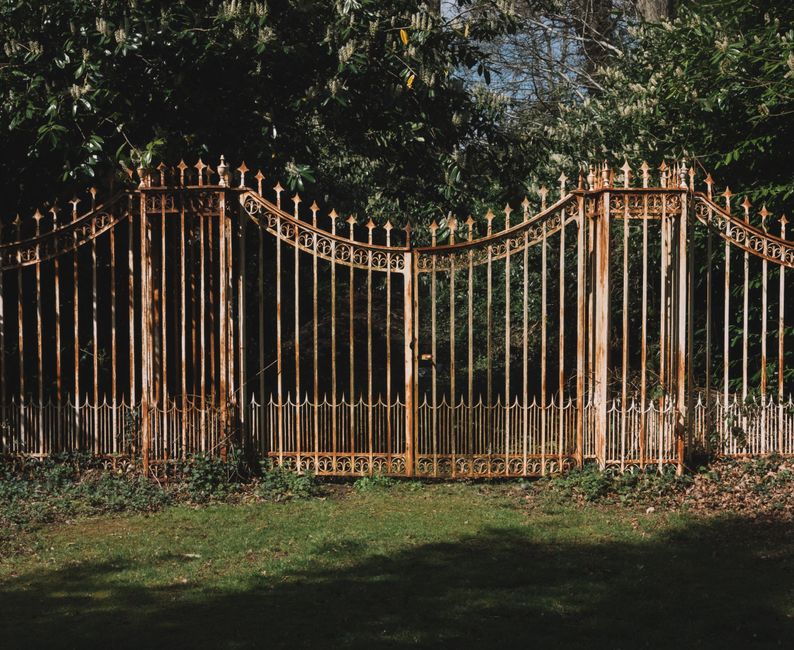
Most gate frames in Carlsbad are steel tubing with a weld at every corner. Welds, cut ends and drilled holes are where coatings run thin, so that is where rust starts. A chip or scratch through the coating exposes bare metal, and rust then spreads under the surrounding finish, lifting paint well beyond the original damage. Touching up a chip early costs a few minutes. Ignoring it costs a rail.
Galvanized steel

Hot dip galvanizing coats steel in zinc, and the zinc corrodes first, which protects the steel underneath. For a coastal frame, galvanized tubing gives the coating a base that tolerates small nicks far better than paint alone. Welding on galvanized material burns off the zinc locally, so those joints need to be cleaned and recoated before the gate goes up.
Aluminum and powder coat
Aluminum forms a thin oxide layer that protects it, so it does not rust the way steel does, though it can pit in salty conditions. It can carry a driveway gate, but it needs heavier tubing and tighter bracing on a wide swing gate or slide gate than the same design in steel. Powder coat is applied as a dry powder and baked to cure, and it lasts longest over properly cleaned and pretreated metal. It still needs rinsing and inspection. It does not make any metal maintenance free.
Stainless and the fasteners
Type 316 stainless contains molybdenum, which gives it better resistance to chlorides than type 304. That makes 316 the sensible choice for hinges, bolts and hardware near the coast, though no stainless is immune to staining and surface corrosion in salt. Fasteners also need to match the gate material. When dissimilar metals touch in the presence of moisture, galvanic corrosion can attack the less noble metal, and a mismatched bolt will eat the aluminum or zinc around it.
Wood and wrought iron styles
Wood swells and shrinks with moisture, which can cause warping and sag on large leaves. A sagging leaf drags on the ground and loads the operator and gate opener beyond what they were sized for. Wrought iron styling, with scrolls and picket infill, is usually built from steel today, so it needs the same coating care as any other steel gate. In Carlsbad, the material decision comes down to how much coating damage the gate will realistically take and how soon it gets repaired.